Is Your Business Still Chasing Customers Through Emails and Calls? It’s Time to Switch to WhatsApp CRM. Today’s customers don’t wait—they message. And more often than not, they message on WhatsApp. With over 2 billion active users, WhatsApp has transformed into the go-to channel for real-time, convenient, and personal communication. But while customers are ready to chat, most businesses aren’t prepared to keep up. Here’s the truth: if you're still relying on scattered emails, outdated CRMs, or juggling multiple tools to manage customer interactions, you’re already falling behind. The solution? WhatsApp CRM—a game-changing approach that brings all your WhatsApp customer conversations into one smart, streamlined platform.
But not all WhatsApp CRM providers are created equal. The market is growing fast—and while options are plenty, choosing the right platform that fits your workflows, goals, and scale can be overwhelming. That’s why this blog covers everything you need to know:
Whether you're running an e-commerce store, managing a sales team, or building a customer-first SaaS startup, integrating WhatsApp into your CRM stack is no longer a luxury—it’s a competitive edge. Let’s explore how you can make it work for your business—starting today. What Is a WhatsApp CRM and How Does It Work?
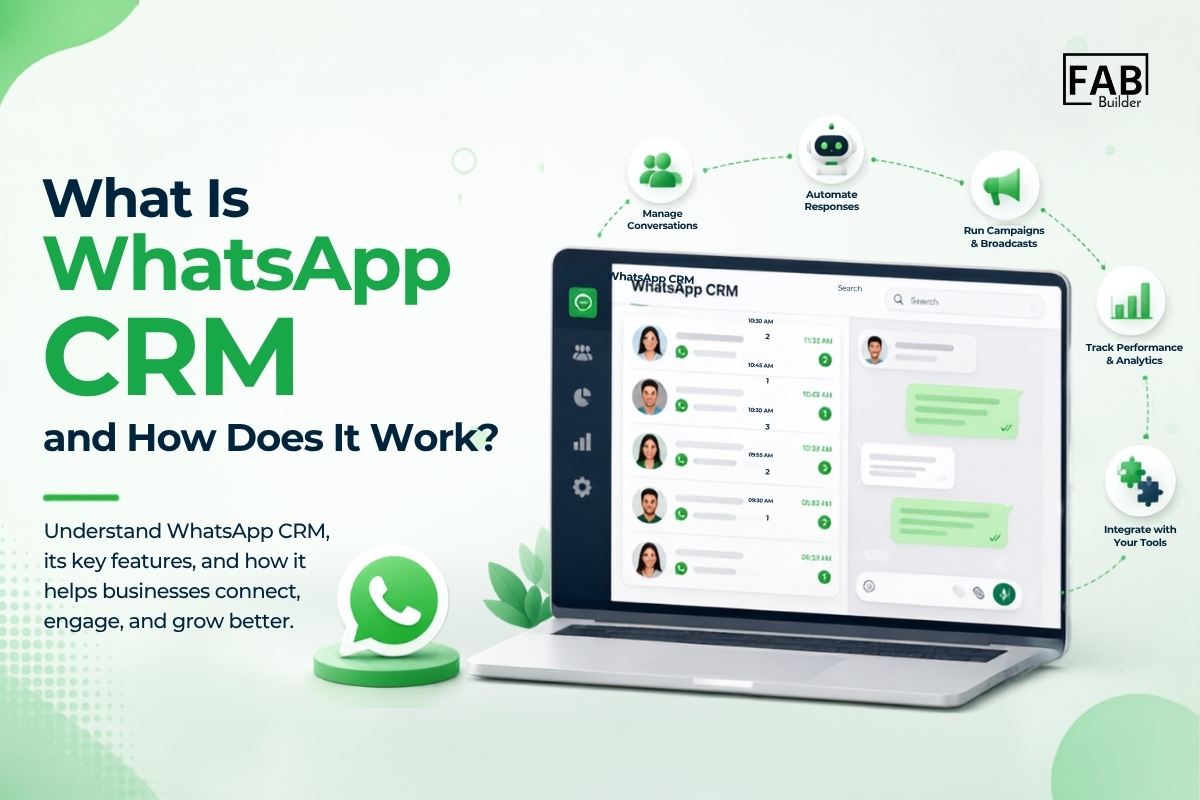
A WhatsApp CRM (Customer Relationship Management) system is a modern communication and engagement tool that allows businesses to manage customer relationships directly through WhatsApp. It acts as a centralized hub that brings together sales, marketing, and support functions—making customer interactions more personalized, responsive, and trackable. Unlike traditional CRMs that rely heavily on email threads or phone calls, WhatsApp CRMs integrate with the WhatsApp Business API to give companies a direct, real-time communication channel with their audience. Considering WhatsApp has over 2 billion active users globally, it’s no surprise that businesses are shifting their customer engagement strategies to meet users where they already are. A WhatsApp CRM offers much more than chat:
A WhatsApp CRM turns casual conversations into structured customer journeys—from the first inquiry to post-sale support—allowing businesses to deliver consistent, high-quality service at every touchpoint. Whether you're capturing leads from a website, running drip campaigns, sending order updates, or resolving customer complaints, a WhatsApp CRM ensures everything happens in one place, with full visibility and control. Why Do Businesses Need a WhatsApp CRM Solution?
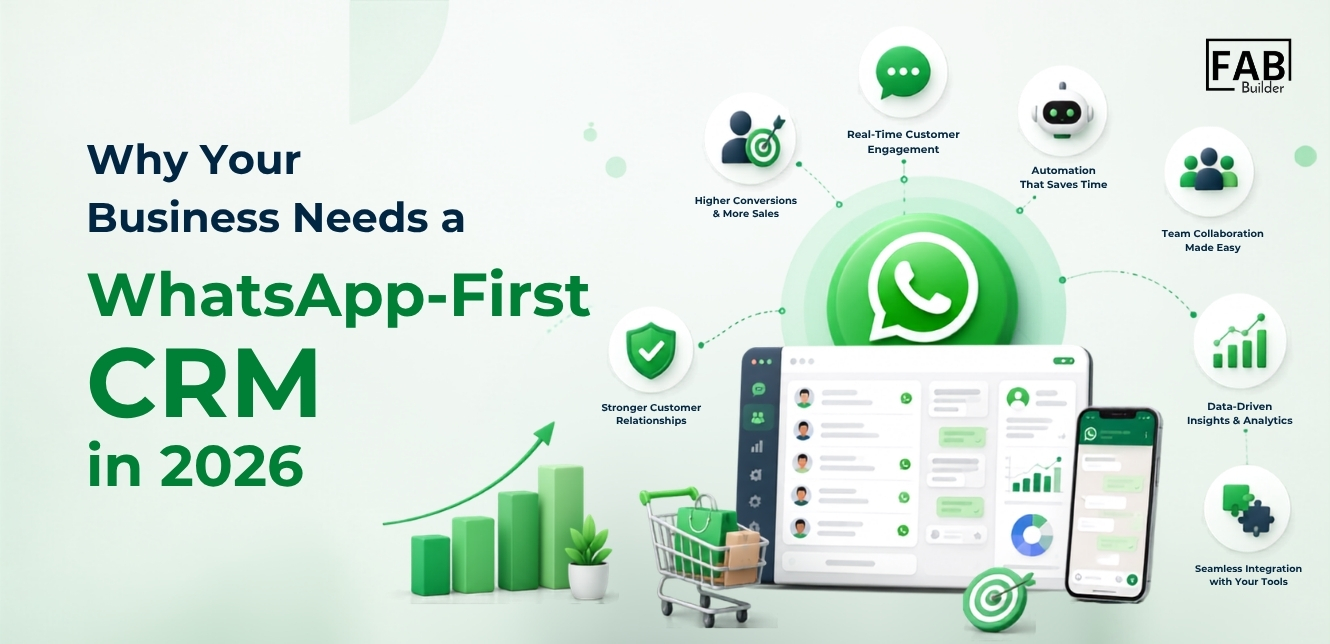
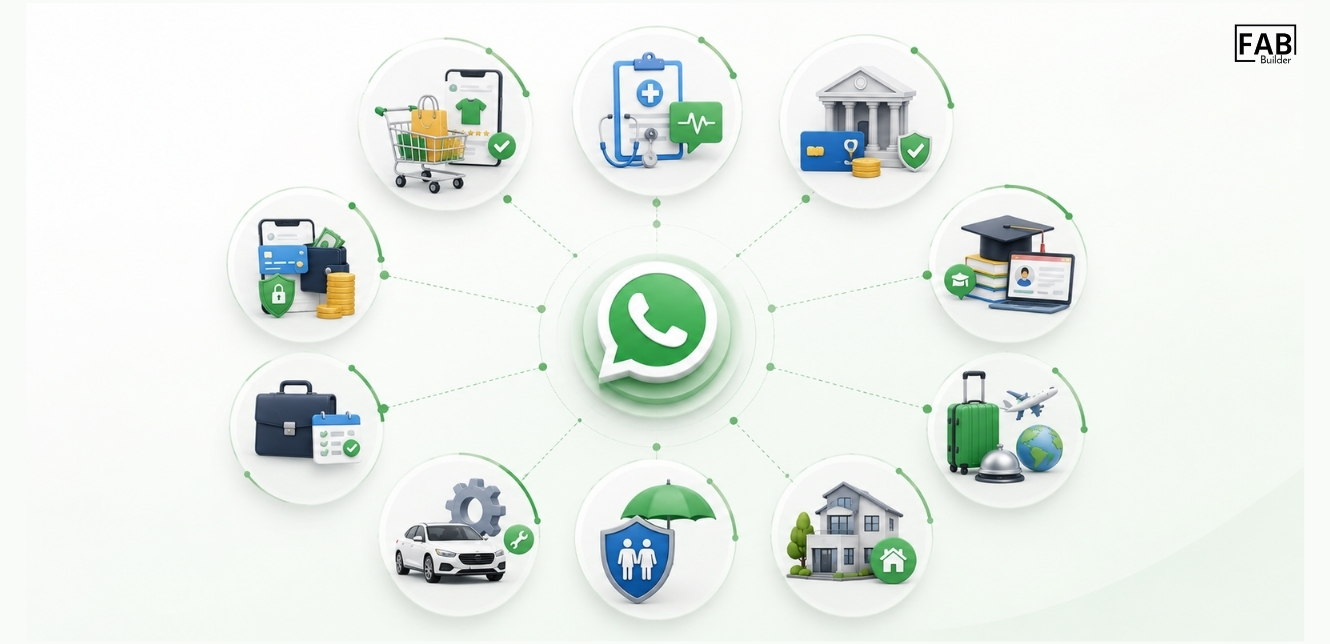
In an era where instant gratification is the norm, customer expectations have dramatically evolved. They no longer have the patience for delayed responses, lengthy forms, or email chains that go unanswered. Instead, they want quick, convenient, and personalized conversations—and WhatsApp has become their go-to platform. So, where does that leave businesses? If you're still relying on email or basic chat plugins, you're already a step behind. This is where a WhatsApp CRM becomes a game-changer. Here’s why modern businesses—especially those in fast-paced industries like e-commerce, fintech, healthcare, and SaaS—are turning to WhatsApp CRMs: 1. Unmatched Engagement RatesWhatsApp messages boast an open rate of over 98%, which makes them one of the most effective channels for reaching your customers. Compare that to email marketing’s average open rate of 20–30%, and the difference is staggering. 2. Real-Time, Two-Way ConversationsWhatsApp CRMs allow you to connect with customers instantly—whether it’s answering a query, sharing a payment link, or guiding them through your onboarding flow. You’re not just sending updates—you’re building relationships in real time. 3. Centralized Customer CommunicationWithout a CRM, WhatsApp chats are scattered across individual team members' devices or inboxes, leading to missed messages and poor follow-up. A WhatsApp CRM brings every conversation into a shared, searchable workspace, improving accountability and response times. 4. Streamlined Lead ManagementFrom capturing leads via WhatsApp chat widgets on your website to segmentation and automated nurturing, a WhatsApp CRM ensures you don’t just attract leads—you convert them. Tag leads, score them, assign them to agents, and track their journey—all within one platform. 5. Better Team Collaboration and SLA ManagementAssign chats to the right team members, set response time goals (SLAs), and get real-time visibility into performance metrics. Whether you’re running a small support team or a global sales operation, WhatsApp CRM helps your team stay aligned and accountable. 6. Scalability Without Losing the Personal TouchAs your customer base grows, keeping communication personalized can be challenging. With automated greetings, template responses, and intelligent routing, a WhatsApp CRM helps you scale your communication without sounding robotic. If you want to meet customers where they already are, offer world-class support, and grow your business through meaningful, real-time conversations—you need a WhatsApp CRM. It’s no longer just a “nice-to-have.” It’s a competitive necessity. What Are the Key Benefits of Using a WhatsApp CRM Provider?
When it comes to scaling customer communication through WhatsApp, building your own infrastructure from scratch is not just time-consuming—it’s risky and expensive. That’s where WhatsApp CRM providers come in. By partnering with an experienced WhatsApp CRM provider, you gain more than just a messaging tool—you unlock a powerful customer engagement ecosystem without the heavy lifting. Here’s how your business can benefit: 1. Faster API Access and Hassle-Free SetupGetting direct access to WhatsApp’s Business API can be a complicated process that requires business verification, technical integration, and compliance checks. A good WhatsApp CRM provider simplifies this entire process—getting you approved, verified, and connected in days, not weeks. You focus on your customers—they handle the backend. 2. Built-in Automation for Smart Customer JourneysToday’s customers expect speed, not just service. WhatsApp CRM platforms come with pre-built automations that take care of repetitive tasks:
The result? A seamless, 24/7 customer experience with minimal manual effort. 3. Team Collaboration Through Shared InboxManaging conversations from multiple agents on one WhatsApp number can be a nightmare—unless you have a shared team inbox. With a WhatsApp CRM, you get:
This is especially critical for businesses handling support, sales, and operations across multiple touchpoints. 4. Real-Time Analytics and Actionable InsightsGuesswork has no place in modern customer service. With a WhatsApp CRM provider, you get detailed dashboards that tell you exactly what’s working and what needs improvement. Track:
These insights let you optimize your strategy and measure ROI—no spreadsheets required. 5. Scalability with Built-In ComplianceAs your business grows, your messaging infrastructure needs to scale with you. Reputable WhatsApp CRM providers offer secure, scalable systems that adhere to privacy laws like GDPR and local data regulations. You won’t need to worry about throttling issues, message limits, or data breaches. Your provider has it covered. Which Are the Best WhatsApp CRM Tools to Use in 2026?With WhatsApp becoming a central channel for real-time communication, businesses are turning to specialized WhatsApp CRM platforms to streamline conversations, automate workflows, and elevate customer engagement. Choosing the right provider is essential—not just for messaging, but for managing leads, support, and sales within a unified system. Below are the leading WhatsApp CRM providers for 2026, known for their innovation, scalability, and ability to support diverse business needs. 1. WATI – Customer Support-Centric WhatsApp CRM PlatformWATI is a robust WhatsApp CRM built for customer support teams. It provides advanced automation and smart routing capabilities to help businesses handle a high volume of WhatsApp queries efficiently. Key Features:
Use Cases:
Why Choose WATI: WATI is perfect for businesses that prioritize support quality and need a scalable, rules-driven platform for high-volume WhatsApp interactions. 2. Gallabox – Simple and Affordable WhatsApp CRM for SMEsGallabox is a plug-and-play WhatsApp CRM platform tailored to small and medium-sized businesses that want to improve their customer communication without heavy tech investment. Key Features:
Use Cases:
Why Choose Gallabox: Gallabox is ideal for small teams looking for affordability, easy setup, and ready-to-use features that simplify customer engagement on WhatsApp. 3. Zoko – E-commerce Focused WhatsApp CRM SolutionZoko specializes in providing a WhatsApp CRM built specifically for online stores. Its integration with Shopify and WooCommerce makes it a top choice for e-commerce companies that want to boost sales and support through personalized WhatsApp interactions. Key Features:
Use Cases:
Why Choose Zoko: For e-commerce brands that want to turn WhatsApp into a revenue channel, Zoko offers a feature-rich and commerce-friendly experience. 4. FAB CRM – Complete WhatsApp CRM Platform for Modern BusinessesFAB CRM offers a comprehensive and intuitive WhatsApp CRM system designed for growing businesses that want to centralize communications, automate outreach, and enhance team productivity—without writing a single line of code. Key Features:
Use Cases:
Why Choose FAB CRM: FAB CRM combines ease of use with enterprise-grade features, making it ideal for startups, SMBs, and mid-sized enterprises looking to scale WhatsApp-based customer engagement quickly. 5. Respond.io – Omnichannel CRM with Advanced WhatsApp CapabilitiesRespond.io is an enterprise-grade platform that integrates multiple messaging channels—including WhatsApp, Messenger, Telegram, and others—into a single inbox. While it’s not WhatsApp-exclusive, its robust automation and customization make it one of the most powerful WhatsApp CRM providers available. Key Features:
Use Cases:
Why Choose Respond.io: Respond.io is best suited for large enterprises and organizations that want complete control, customization, and omnichannel visibility—while still maximizing their WhatsApp communication strategy. 10 Must-Have Features in a Modern WhatsApp CRM Platform
A WhatsApp CRM is more than just a chat tool—it’s the command center for managing relationships, automating customer journeys, and boosting operational efficiency. If you're evaluating CRM platforms for your business, it's critical to look beyond surface-level features and invest in a solution that supports scalability, automation, and personalization. Here are 10 essential features every modern WhatsApp CRM should offer: 1. Shared Team InboxA shared inbox allows your customer support, sales, and marketing teams to manage all WhatsApp conversations from a unified dashboard. With team-wide visibility, agents can collaborate on queries, avoid duplicate responses, and deliver a seamless customer experience. Why it matters: In fast-paced environments, it's easy to lose track of who responded to whom. A shared inbox brings transparency and ensures no customer inquiry is left unanswered. Use case: A customer contacts your support team about a delayed order. An agent sees the previous conversation and continues the thread with full context—without asking the customer to repeat themselves. 2. Chat Assignment and RoutingAutomated chat assignment helps direct incoming queries to the right team members based on factors like customer type, issue category, or agent availability. Smart routing reduces wait times and improves first-response resolution. Why it matters: Manual chat distribution leads to inefficiencies and delays. Automated routing ensures faster responses and better use of your team's time. Use case: Sales inquiries get routed to your business development team, while refund requests are sent directly to the finance or support desk. 3. Automation WorkflowsFrom sending welcome messages and appointment reminders to nurturing leads with drip campaigns, automation allows you to scale interactions without adding manual workload. Why it matters: Automation enhances response time and enables proactive engagement. It also ensures 24/7 availability—even when your team is offline. Use case: New users receive an onboarding message the moment they interact with your WhatsApp account. Follow-up messages are automatically triggered based on their actions. 4. CRM IntegrationA good WhatsApp CRM integrates seamlessly with major CRMs like Salesforce, HubSpot, Zoho, and others. This two-way sync lets you pull customer data into conversations and push conversation insights back into your CRM. Why it matters: Integrations reduce the need to switch between tools and centralize your data for smarter, more personalized interactions. Use case: When a customer replies to your WhatsApp campaign, their engagement score is updated in HubSpot, triggering an email follow-up from the marketing team. 5. Contact SegmentationSegment your contacts by demographics, behavior, purchase history, engagement levels, or custom tags. Targeted communication becomes much easier when your audience is well-organized. Why it matters: Generic messaging doesn’t convert. Segmentation ensures that the right message reaches the right audience at the right time. Use case: You create different campaigns for repeat buyers, new leads, inactive users, and high-value clients—with personalized messaging for each segment. 6. Template ManagementWhatsApp requires certain outbound messages to use pre-approved templates. A CRM should allow you to store, organize, and send these templates effortlessly across campaigns and support workflows. Why it matters: Template compliance ensures your messages are delivered successfully without being flagged. It also saves time on repetitive messaging. Use case: You quickly send a "Your order has been shipped" update using a pre-approved message, complete with dynamic customer and tracking details. 7. Campaign & Broadcast ToolsWhether you're launching a flash sale or announcing a new service, campaign tools let you send personalized messages to thousands of contacts at once—based on smart filters and scheduling options. Why it matters: Broadcasts can drive engagement, conversions, and retention—when used responsibly and strategically. Use case: You run a targeted broadcast to users who haven’t purchased in 30 days, offering them a 10% discount if they order within the next 24 hours. 8. Real-Time AnalyticsAnalytics tools track key performance metrics such as delivery rates, open rates, response times, resolution rates, CSAT (Customer Satisfaction Score), and agent performance. Why it matters: Data helps you identify what’s working and where you need to improve. Real-time insights enable agile decision-making. Use case: You notice a drop in response times after hours and decide to introduce automation or add support coverage during those windows. 9. Security and ComplianceA robust CRM must follow data protection regulations such as GDPR and provide encryption for all communications. Role-based access, audit logs, and two-factor authentication also ensure secure operations. Why it matters: Customer data is sensitive. Failing to secure it can result in legal issues and loss of customer trust. Use case: A finance department user can view billing conversations, while the marketing team only accesses campaign-related chats—thanks to granular access controls. 10. Mobile and Desktop AccessYour team should be able to manage WhatsApp conversations whether they’re working from a desktop, tablet, or mobile device. Cross-platform accessibility keeps your team responsive—no matter where they are. Why it matters: Field sales agents, remote support teams, and on-the-go managers all need real-time access to chat tools. Use case: A field rep traveling to a client meeting quickly responds to a WhatsApp inquiry from the mobile app while en route. WhatsApp Business API vs. WhatsApp CRM: What’s the Difference?As WhatsApp becomes a primary communication channel for businesses, it’s important to understand the distinction between the WhatsApp Business API and a WhatsApp CRM. Though they work together, they serve very different roles in customer engagement. What Is the WhatsApp Business API?
However, it doesn’t come with a user interface or built-in CRM tools. You’ll need to integrate it into your own system or use a provider to access its full potential. Key capabilities include:
But on its own, the API doesn’t support features like agent assignment, chat routing, or analytics dashboards. What Is a WhatsApp CRM?
Unlike the raw API, a WhatsApp CRM requires no technical integration—everything is ready to use. These platforms are ideal for sales, marketing, and support teams that want to scale engagement without building custom infrastructure. Key features of a WhatsApp CRM include:
The Key Difference Between WhatsApp Business API and WhatsApp CRMThe WhatsApp Business API is the foundation—it gives you access to WhatsApp messaging at scale, but it’s not usable without development or third-party platforms. A WhatsApp CRM, on the other hand, is a ready-made solution built to work on top of the API. It brings together automation, analytics, team management, and integrations in a single dashboard. In simple terms: The API gives you the engine, but the CRM gives you the fully equipped vehicle ready to drive customer engagement. When Should You Use Each?
How to Choose the Best WhatsApp CRM for Your Business?Selecting the right WhatsApp CRM provider can make or break your communication strategy. With a growing number of platforms offering WhatsApp integrations, it’s important to filter out the noise and focus on solutions that align with your specific business needs, team structure, and long-term goals. Here’s a step-by-step guide to help you choose the best WhatsApp CRM for your organization: 1. Define Your Business Objectives and Use CasesBefore comparing features or pricing, ask yourself: What do we need WhatsApp for?
Understanding your core use cases helps narrow down CRM platforms that are optimized for that purpose. For example:
2. Evaluate Core Features That MatterNot all WhatsApp CRM providers are created equal. While some platforms focus on basic automation, others offer full-featured suites for support, sales, and marketing. Look for these must-have features:
Pro tip: Ensure the platform is WhatsApp Business API-approved. This ensures compliance, scalability, and access to advanced features. 3. Prioritize Usability and Onboarding SpeedA powerful tool is only effective if your team knows how to use it. Choose a CRM that has:
For fast-growing teams, speed of adoption is critical. Platforms like FAB CRM stand out with their no-code setup, drag-and-drop automation builder, and clean UI that new users can understand within minutes. 4. Consider Integration CapabilitiesYour WhatsApp CRM shouldn’t operate in isolation. It should integrate seamlessly with the tools your team already uses. Look for integrations with:
Integrations allow for automated data syncing, unified reporting, and smooth handoffs between sales, marketing, and support teams. 5. Assess Scalability and Customer SupportYour needs today may look different from your needs six months down the line. Choose a WhatsApp CRM that can scale with your business. Key questions to ask:
Also, check the quality of customer support:
Strong customer support becomes vital as you expand across teams, languages, or customer segments. 6. Compare Pricing Against ValueWhile pricing is a factor, don’t choose based solely on the cheapest plan. A good CRM will pay for itself by improving productivity, conversion rates, and customer satisfaction. Evaluate:
Why FAB CRM Ticks All the Right BoxesIf you're looking for a well-rounded solution built for modern businesses, FAB CRM is a strong contender. It offers:
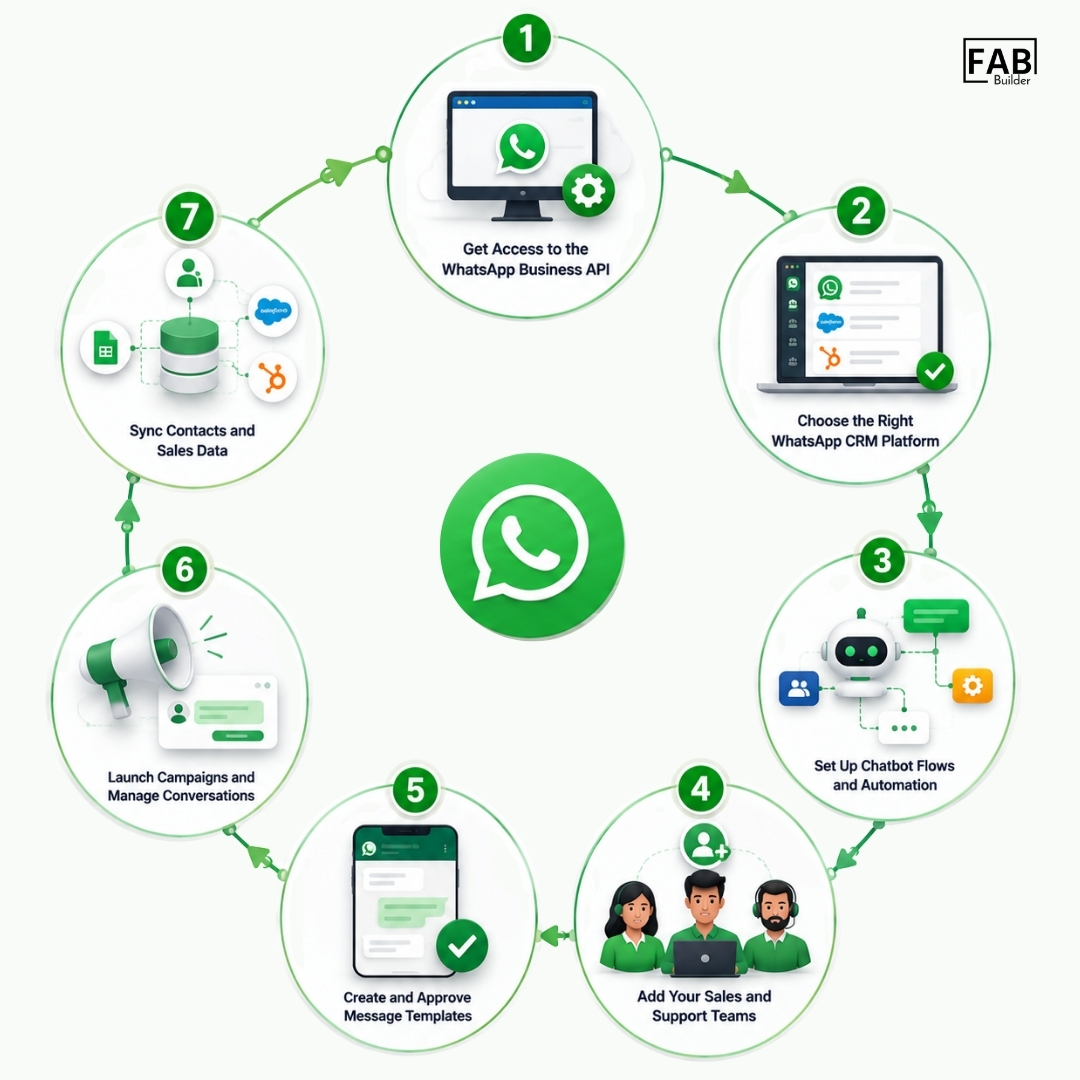
Whether you're running a digital-first startup or a mid-sized enterprise, FAB CRM provides the features, flexibility, and scalability to help you turn WhatsApp into a high-conversion communication channel. How to Get Started With a WhatsApp CRM and Make the Most of It?Adopting a WhatsApp CRM isn’t just a tech upgrade—it’s a customer experience revolution. It lets you meet your audience where they are, talk to them like real people, and manage interactions at scale with clarity and context. Whether you’re a D2C brand, SaaS startup, or service-based business, a well-chosen WhatsApp CRM platform will help you:
FAB CRM is built to help you do all of that—and more—without writing a single line of code. If you're ready to transform your customer engagement strategy, your WhatsApp CRM journey starts now. ConclusionIn today’s fast-paced digital landscape, businesses can no longer afford to treat WhatsApp as just another messaging app. It has evolved into a powerful channel for customer engagement, sales enablement, and post-sale support. But to truly unlock its potential, you need a robust CRM platform built around WhatsApp's strengths. From automation and analytics to team collaboration and security, the right WhatsApp CRM should do more than just manage conversations—it should empower your team to build meaningful relationships at scale. Whether you're a startup aiming for growth or an enterprise streamlining operations, investing in a feature-rich WhatsApp CRM is a strategic move toward better efficiency, personalization, and customer satisfaction. Choose wisely—because your CRM isn’t just a tool, it’s the heart of your customer experience. Streamline conversations, automate workflows, and boost customer engagement—all in one place. |